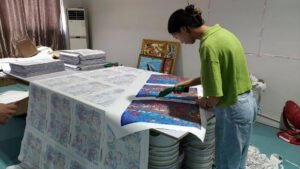
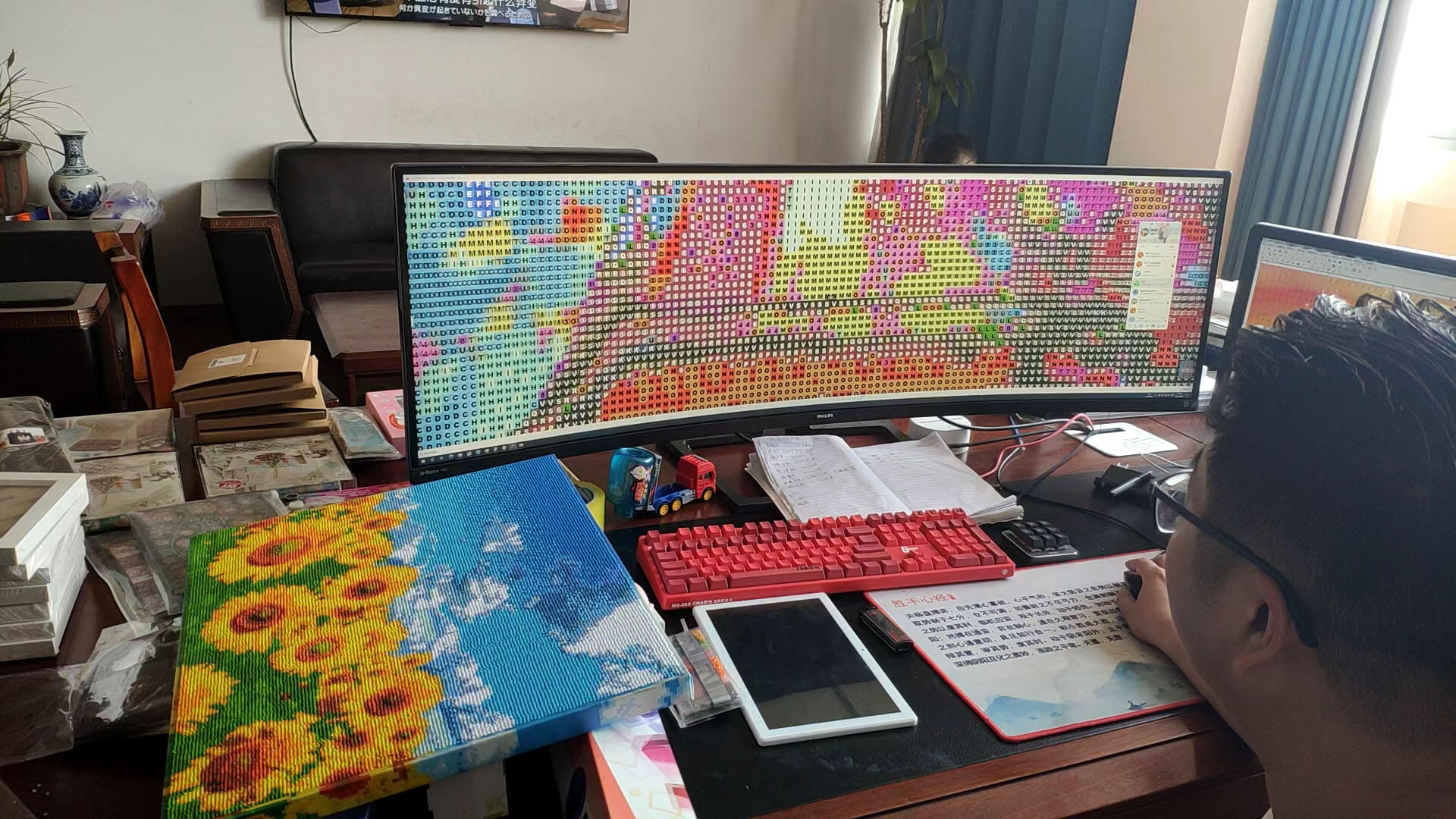
If you have stumbled upon glowing social media posts showing vibrant, sparkling mosaics, you have likely encountered diamond art. Also widely known as diamond painting, this modern craft phenomenon has taken the DIY, home decor, and toy industries by storm.
Whether you are a newcomer wanting to understand the craft or a merchant looking to add high-margin products to your store, this comprehensive guide covers everything about diamond art—from its basic mechanics and key components to drill types and commercial selection criteria.
The Core Concept: How Diamond Art Works
At its simplest, diamond art is a hybrid of Cross-Stitch and Paint-by-Numbers.
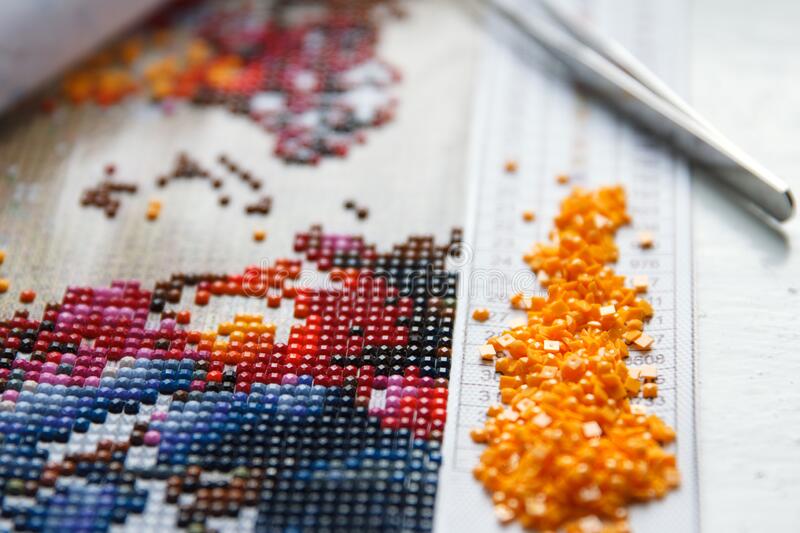
Instead of using thread or wet paint, creators use tiny, flat-backed resin rhinestones (called “drills”) to construct a shimmering mosaic. The process follows a straightforward system:
- The Grid Base: A pre-printed canvas is marked with tiny symbols corresponding to specific color codes.
- The Adhesive Layer: The canvas is coated with a sticky layer protected by a peel-back film.
- The Application: Crafters use a specialized stylus tool dipping into wax to pick up individual drills and place them onto their matching canvas symbols.
When completed, hundreds or thousands of faceted resin pieces catch the light, creating a 3D textured artwork that closely resembles a traditional stained glass or crystal mosaic.
Diamond Art vs. Other Popular DIY Crafts
To truly understand what diamond art is, it helps to compare it directly with rival craft categories:
| Feature | Diamond Art | Paint by Numbers | Cross-Stitch |
| Skill Barrier | Very Low | Moderate | Moderate to High |
| Mess Factor | Zero (Dry Craft) | High (Paint/Water) | Low |
| Visual Effect | 3D Sparkle / Shiny | Flat Matte Paint | Textured Thread |
| Speed of Completion | Fast to Moderate | Moderate | Slow |
| Error Correction | Easy (Lift & Move) | Hard (Paint Over) | Hard (Unstitch) |
- Why it wins on accessibility: Unlike painting, there is no mixing of colors, no paintbrushes to wash, and zero waiting time for liquid paint to dry.
- Why it wins on texture: The faceted resin edges reflect ambient light, giving the final piece a dynamic shine that flat paint or flat thread cannot match.

Anatomy of a Complete Diamond Art Kit
When you unbox a standard retail diamond art kit, it contains four essential elements engineered to work together seamlessly:
1. The Canvas
The foundation of the project. High-quality canvases use heavy-duty, velvet-flocked fabric with finished edges to prevent fraying. The surface features clear, high-contrast symbols to reduce eye strain.
2. The Diamond Drills
These are the small resin gems that create the artwork. They are organized in small sealed packets, labeled with numbers that correspond to the universal DMC color chart used in cross-stitch.
3. The Adhesive Layer
The sticky bond holding the gems in place. Premium kits use poured hydrogel glue, which remains tacky even when exposed to air during long crafting sessions. Lower-end kits use double-sided sticky tape.
4. The Tool Set
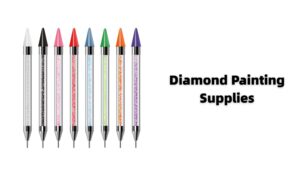
- Applicator Pen (Stylus): A hollow-tipped tool used to press into wax and transfer drills.
- Wax Pad: Sticky pink resin that sits inside the pen tip to create vacuum suction.
- Grooved Sorting Tray: A plastic tray with ridges that align the drills face-up when shaken gently.
Round vs. Square Drills: Which Type Should You Choose?
The biggest structural distinction in diamond art comes down to the shape of the drills.

Round Diamonds (Partial & Full Drill)
- Shape & Fit: Circular profile. Small gaps remain between the beads, allowing the background canvas color to show slightly through.
- Ease of Use: Very forgiving. You do not need to line up the edges precisely.
- Best For: Beginners, children, quick weekend projects, and budget-friendly product lines.
Square Diamonds (Full Drill)
- Shape & Fit: Sharp 90-degree square edges. They fit flush together with zero canvas gaps.
- The “Snap” Effect: When placed tightly together, they create a crisp, satisfying “snap” feel.
- Best For: Advanced crafters, large-scale designs, detailed landscapes, and high-end retail brands.
Key Dimensions & Scale Selection Guide
Size directly dictates how much detail the final diamond art piece will display. Because each drill acts like a fixed pixel on a screen, larger canvases yield significantly higher visual resolution.
| Canvas Size (cm) | Visual Resolution | Best Suited For |
| 20 x 20 / 30 x 30 | Low (Pixelated) | Simple cartoon icons, kids’ art, basic symbols |
| 30 x 40 / 40 x 40 | Medium (Standard) | Single focal subjects, simple floral, close-up pets |
| 40 x 50 / 50 x 70 | High (Detailed) | Landscapes, complex portraits, fine art reproductions |
| 60 x 80+ | Ultra-High (Master) | Massive custom family photos, complex panoramic scenes |
Frequently Asked Questions (FAQ)
Q1: How long does it take to complete a diamond art project?
A: A small 30×30 cm canvas takes roughly 6 to 10 hours for a beginner. Larger 50×70 cm canvases with square drills can take anywhere from 30 to 60 hours depending on experience level and tool usage (e.g., using multi-placer pen tips).
Q2: What is the difference between “Full Drill” and “Partial Drill”?
A: “Full Drill” means the entire canvas surface is covered with diamonds. “Partial Drill” means diamonds are placed only on specific focal areas (like a butterfly or flower), leaving the printed background plain.
Q3: Do diamond paintings fall apart over time?
A: Kits made with poured hydrogel glue hold diamonds permanently for years. Once completed, many crafters seal their artwork using clear acrylic craft sealer to lock the beads in place and prevent dust accumulation.
Q4: Is diamond art suitable for young children?
A: Yes, provided the child is past the age of mouth-ingestion risks (choking hazard). Round drill kits in 20×20 cm sizes are widely marketed as educational toys that improve fine motor skills and patience in children aged 6 and up.
Conclusion: Sourcing & Market Opportunities
Diamond art has evolved from a niche hobby into a mainstream retail staple. Its low barrier to entry, stress-relieving appeal, and high visual reward make it a top performer across e-commerce marketplaces, craft stores, and toy catalogs worldwide.
Looking to Source Custom Diamond Art Kits?
If you are a retailer, brand owner, or distributor seeking high-quality diamond art kits with custom packaging, certified ABS resin drills, and poured glue technology, TonySourcing can streamline your procurement. [Contact Us Today] to request product catalogs, sample kits, or factory quotes.